
Decision Intelligence for Soil Load Mapping
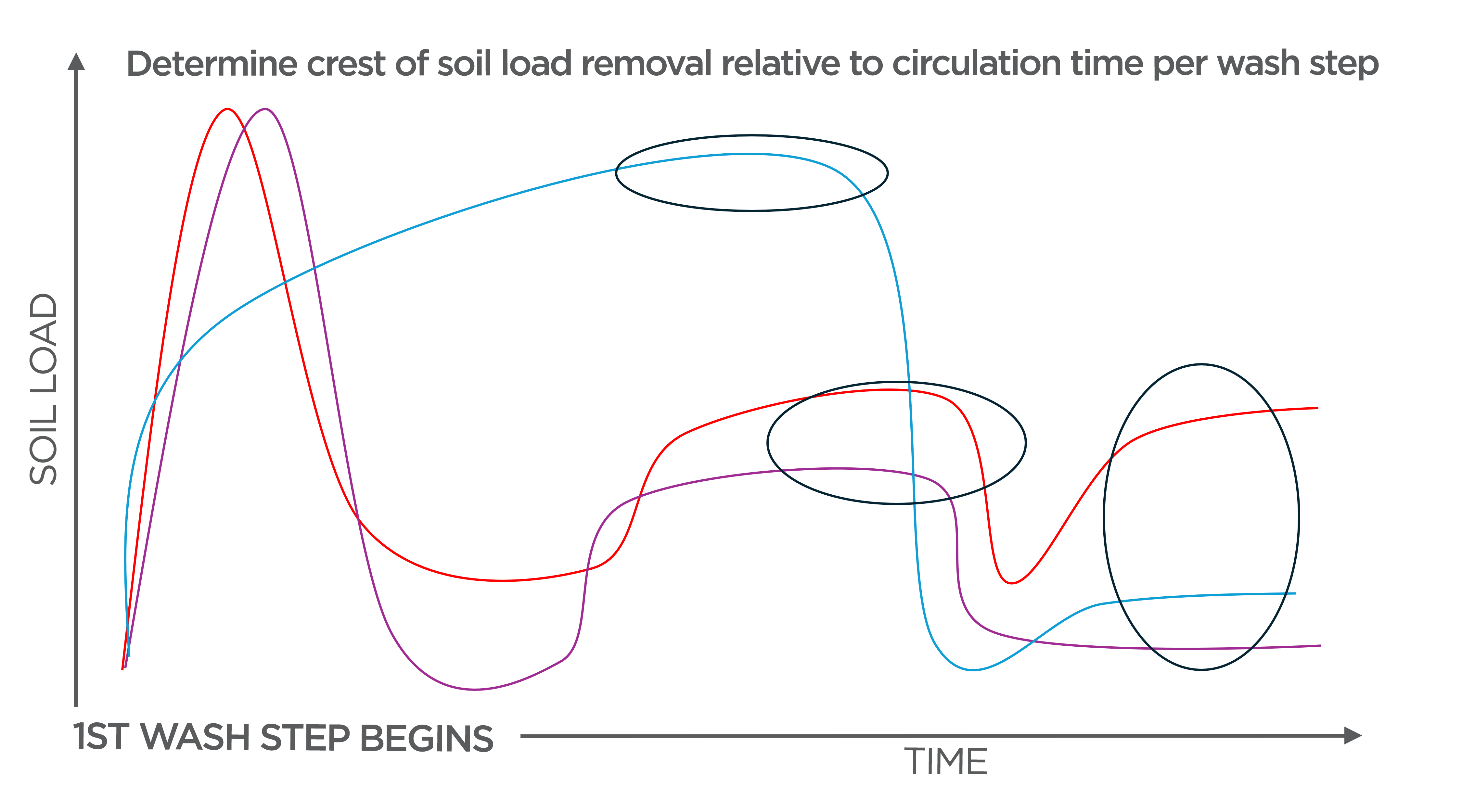
In most clean-in-place or stand-alone systems, once a circuit begins cleaning, soil removal starts instantaneously and progresses until time, temperature, mechanical action and chemical concentrations meet their respective specifications. During said removal, soil accumulates in the CIP wash solution and eventually reaches a maximum load, wherein a new step or recipe needs to be introduced. If a new step or recipe is not introduced, the accumulated soil can redeposit onto its original surfaces and thus become counterproductive. By monitoring soil load while a circuit cleans, a soil load map can be generated and then analyzed for identifying optimization opportunities.
SLM™ and Hydri-SLM RT™ is real-time soil load intelligence that tells you when clean is clean. By having a soil load map for each cleaning circuit throughout your CIP programs, optimization recommendations can be made in addition to understanding the comprehensive impact of change, including minimizing, or even eliminating current risks aligned to production schedules, processing equipment components, effluent, food safety and finished product quality.
SLM™
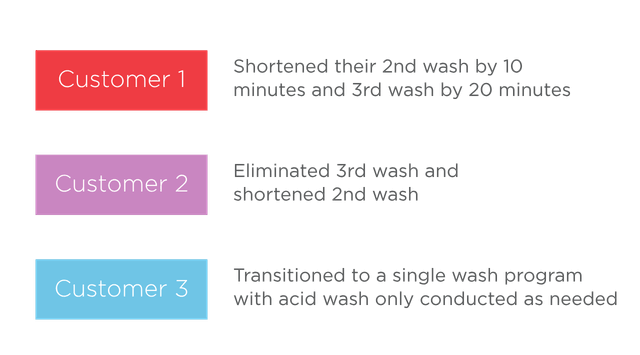
Hydrite's first-gen clean-in-place technology helps users identify unique opportunities for maximizing optimization and minimizing risk, with demonstrated success of reducing CIP time, water usage, and chemical spend.
HYDRI-SLM RT™
Building off of Hydrite's SLM™ technology, the new Hydri-SLM RT™ in-line solution uses PC-based, sensor technology to collect, visualize, and interpret data in real time. That means identifying when "clean" occurs in a wash sequence utilizing any wash recipe.
Real Time Soil Load Intelligence for CIP Optimization
Know when clean is clean—without over washing. Hydrite’s Soil Load Mapping (SLM™) and Hydri SLM RT™ technologies provide real time visibility into soil removal during membrane CIP, enabling smarter, more efficient cleaning programs.
Why Soil Load Intelligence Changes Everything
In membrane systems, cleaning effectiveness is not linear. Soil removal peaks, plateaus, and can even reverse through redeposition. Soil load mapping quantifies this process—revealing exactly when cleaning is effective and when it becomes wasteful or risky.
 See What Traditional CIP Misses
By monitoring soil accumulation throughout each wash step, SLM™ identifies:
- Cleaning during heat up phases
- Extended wash times with little or no benefit
- Points where redeposition risk increases
This insight enables targeted CIP optimization without compromising membrane integrity or food safety.
From Insight to Optimized Programs
With soil load data, Hydrite experts can help:
- Reduce unnecessary wash time and steps
- Adjust chemistry and temperature with confidence
- Improve consistency across membrane systems
The result is a CIP program aligned to actual cleaning performance—not assumptions.

Sustainability impact in practice
Soil load mapping has enabled reductions in CIP time, energy, and water usage by identifying unnecessary steps and excessive wash durations.
Traditional CIP vs. Hydrite CIP Intelligence
Traditional cip
- Fixed recipes and time-based cleaning
- Manual sampling and retrospective analysis
- Limited visibility into chemistry or soil removal
- Higher risk of over cleaning and wasted resources
Hydrite CIP Intelligence
- Real time chemistry and soil load monitoring
- Continuous visibility across every CIP step
- Data driven optimization opportunities
- Greater confidence in food safety, sustainability, and efficiency

tec5USA Exclusivity Alignment
Exclusive Technology Advantage
Hydrite’s real time CIP intelligence platforms leverage advanced in situ spectroscopic sensing technology through a conditional, performance based exclusive agreement for U.S. food and beverage applications—delivering differentiated insight you won’t find in traditional CIP programs.

Analyze the Process

Continuous Sampling & Testing

Data Visualization

Compile Benefits and Establish an Action Plan
See Where Your CIP Is Over‑Cleaning
First Name:
Last Name:
Company Name:
Email Address:
How can we assist?